

Taking medicines to treat tuberculosis
Tuberculosis - medicines; DOT; Directly observed therapy; TB - medicines
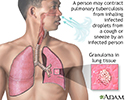
Tuberculosis (TB) is a contagious bacterial infection that mainly involves the lungs, but may spread to other organs. The goal of treatment is to cure the infection with medicines that fight the TB bacteria.

Why Do You Need Medicines for TB?
You may have a TB infection but no active disease or symptoms. This means the TB bacteria remain inactive (dormant) in a small area of your lungs. This type of infection may be present for years and is called latent TB. With latent TB:
- You cannot spread TB to other people.
- In some people, the bacteria can become active. If this happens, you may become sick, and you can pass the TB germs to someone else.
- Even though you do not feel sick now, you need to take medicines to treat latent TB for 6 to 9 months. This is the only way to make sure all of the TB bacteria in your body are killed and you reduce the risk for developing an active infection in the future.
When you have active TB, you may feel sick or have a cough, lose weight, feel tired, or have a fever or night sweats. With active TB:
- You can pass TB to people around you. This includes people you live, work, or come in close contact with.
- You need to take several medicines for TB for at least 6 months to rid your body of the TB bacteria. You should begin to feel better within a month of starting the medicines.
- For the first 2 to 4 weeks after starting the medicines, you may need to stay home to avoid spreading TB to others. Ask your health care provider when it is OK to be around other people.
- Your provider is required by law to report your TB to the local public health department.
- You can be legally forced to take your medicines.
Ask your provider if people you live or work with should be tested for TB.
How to Take the Medicines?
TB germs die very slowly. You need to take several different pills at different times of the day for 6 months or longer. The only way to get rid of the germs is to take your TB medicines the way your provider has instructed. This means taking all of your medicines every day.
If you do not take your TB medicines the right way, or stop taking the medicines early:
- Your TB infection may become worse.
- Your infection may become harder to treat. The medicines you are taking may no longer work. This is called drug-resistant TB and can be very difficult to treat.
- You may need to take other medicines that cause more side effects and are less able to cure the infection.
- You may spread the infection to others.
If your provider is worried that you may not be taking all the medicines as directed, they may arrange to have someone meet with you every day or a few times a week to watch you take your TB medicines. This is called directly observed therapy.
Side Effects and Other Problems
Women who may be pregnant, who are pregnant, or who are breastfeeding should talk to their provider before taking these medicines. If you are using birth control pills, ask your provider if your TB medicines can make birth control pills less effective.
Most people do not have very bad side effects from TB medicines. Problems to watch out for and tell your provider about include:
- Achy joints
- Bruising or easy bleeding
- Fever
- Poor appetite, or no appetite
- Tingling or aches in your toes, fingers, or around your mouth
- Upset stomach, nausea or vomiting, and stomach cramps or pain
- Vision problems
- Yellow skin or eyes (jaundice)
- Urine is the color of tea or is orange (orange urine is normal with some of the medicines)





When to Call the Doctor
Contact your provider if you have:
- Any of the side effects listed above
- New symptoms of active TB, such as cough, fever or night sweats, shortness of breath, or pain in the chest
References
Bailey TC, Philips JA. Tuberculosis. In: Goldman L, Cooney KA, eds. Goldman-Cecil Medicine. 27th ed. Philadelphia, PA: Elsevier; 2024:chap 299.
Centers for Disease Control and Prevention website. Tuberculosis (TB). About tuberculosis. www.cdc.gov/tb/about/index.html. Reviewed January 17, 2025. Accessed January 12, 2026.
Horne DJ, Nahid P. Tuberculosis: treatment of drug-susceptible and drug-resistant. In: Broaddus VC, Ernst JD, King TE, et al, eds. Murray and Nadel's Textbook of Respiratory Medicine. 7th ed. Philadelphia, PA: Elsevier; 2022:chap 54.
Huaman MA, Sterling TR, Haas DW. Mycobacterium tuberculosis. In: Blaser MJ, Cohen JI, Holland SM, et al, eds. Mandell, Douglas, and Bennett's Principles and Practice of Infectious Diseases. 10th ed. Philadelphia, PA: Elsevier; 2026:chap 255.
Review Date: 12/13/2025
Reviewed By: Jatin M. Vyas, MD, PhD, Roy and Diana Vagelos Professor in Medicine, Columbia University Vagelos College of Physicians and Surgeons, Division of Infectious Diseases, Department of Medicine, New York, NY. Also reviewed by David C. Dugdale, MD, Medical Director, Brenda Conaway, Editorial Director, and the A.D.A.M. Editorial team.
© 1997- A.D.A.M., a business unit of Ebix, Inc. Any duplication or distribution of the information contained herein is strictly prohibited.
 All rights reserved.