

Sputum culture
Sputum culture
Routine sputum culture is a lab test that looks for germs that cause infection. Sputum is the material that comes up from air passages when you cough deeply.
How the Test is Performed
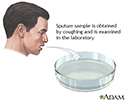
A sputum sample is needed. You will be asked to cough deeply and spit any phlegm that comes up from your lungs into a special container. The thicker the sputum coughed, the better the chances that it represents secretions from the lower respiratory tract and greater likelihood of demonstrating bacteria causing a lung infection. The sample is sent to a lab. There, part of it is placed in a special dish (culture). It is then watched for two to three days or longer to see if bacteria or other disease-causing germs grow.
How to Prepare for the Test
Drinking a lot of water and other fluids the night before the test may make it easier to cough up the sputum.
How the Test will Feel
You will need to cough. Sometimes your health care provider will tap on your chest to loosen deep sputum. Or, you may be asked to inhale a steam-like mist to help you cough up the sputum. You may have some discomfort from having to cough deeply.
Why the Test is Performed
The test helps identify the bacteria or other types of germs that are causing an infection in the lungs or airways (bronchi).
Normal Results
In a normal sputum sample, there will be no disease-causing germs. Sometimes the sputum culture grows bacteria because the sample contains bacteria that are normally present in the mouth.
What Abnormal Results Mean
If the sputum sample is abnormal, the results are called "positive." Identifying bacteria, fungi, or viruses in the sputum may help diagnose the cause of:
- Bronchitis (swelling and inflammation in the main passages that carry air to the lungs)
- Lung abscess (collection of pus in the lung)
- Pneumonia
- Tuberculosis
- Flare up of chronic obstructive pulmonary disease (COPD) or cystic fibrosis





Risks
There are no risks with this test.
References
Baden LR, Griffin MR, Klompas M. Overview of pneumonia. In: Goldman L, Cooney KA, eds. Goldman-Cecil Medicine. 27th ed. Philadelphia, PA: Elsevier; 2024:chap 85.
Daly JS, Haessler S, Ellison RT. Acute pneumonia. In: Blaser MJ, Cohen JI, Holland SM, et al, eds. Mandell, Douglas, and Bennett's Principles and Practice of Infectious Diseases. 10th ed. Philadelphia, PA: Elsevier; 2026:chap 69.
Review Date: 10/1/2025
Reviewed By: Frank D. Brodkey , MD, FCCM, Associate Professor, Section of Pulmonary and Critical Care Medicine, University of Wisconsin School of Medicine and Public Health, Madison, WI. Also reviewed by David C. Dugdale, MD, Medical Director, Brenda Conaway, Editorial Director, and the A.D.A.M. Editorial team.
© 1997- A.D.A.M., a business unit of Ebix, Inc. Any duplication or distribution of the information contained herein is strictly prohibited.
 All rights reserved.