

Pancreatic neuroendocrine tumors
Cancer - pancreas; Cancer - pancreatic; Pancreatic cancer; Islet cell tumors; Islet of Langerhans tumor; Neuroendocrine tumors; Peptic ulcer - islet cell tumor; Hypoglycemia - islet cell tumor; Zollinger-Ellison syndrome; Verner-Morrison syndrome; Gastrinoma; Insulinoma; VIPoma; Somatostatinoma; Glucagonoma; Pancreatic islet cell tumor
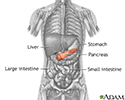
Pancreatic neuroendocrine tumors (NET) are rare tumors of the pancreas that start from a type of cell called the islet cell.
Causes
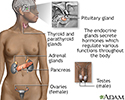
In the healthy pancreas, cells called islet cells produce hormones that regulate several bodily functions. These include blood sugar level (regulated by insulin) and the production of stomach acid (regulated by gastrin).
Tumors that arise from islet cells of the pancreas can also produce a variety of hormones, which can lead to specific symptoms.
Pancreatic NETs can be noncancerous (benign) or cancerous (malignant).


NETs include:
- Gastrinoma (Zollinger-Ellison syndrome)
- Glucagonoma
- Insulinoma
- Somatostatinoma
- VIPoma (Verner-Morrison syndrome)


A family history of multiple endocrine neoplasia, type I (MEN I) is a risk factor for the development of NETs.
Symptoms
Symptoms depend on which hormone is made by the tumor.
For example, insulinomas produce insulin, which lowers the blood sugar level. Symptoms may include:
- Feeling tired or weak
- Shaking or sweating
- Headache
- Hunger
- Nervousness, anxiety, or feeling irritable
- Unclear thinking or feeling uneasy
- Double or blurry vision
- Fast or pounding heartbeat


If your blood sugar level gets too low, you may faint, have a seizure, or even go into a coma.

Gastrinomas make the hormone gastrin, which tells the body to make stomach acid. Symptoms may include:
- Abdominal pain
- Diarrhea
- Ulcers in the stomach and small bowel
- Vomiting blood (occasionally)


Glucagonomas make the hormone glucagon, which helps the body raise blood sugar level. Symptoms can include:
- Diabetes
- Red, blistery rash in the groin or buttocks
- Weight loss
- Frequent urination and thirst


Somatostatinomas make the hormone somatostatin. Symptoms may include:
- High blood sugar
- Gallstones
- Yellowish appearance to skin, and eyes
- Weight loss
- Diarrhea with foul smelling stools


VIPomas make the hormone vasoactive intestinal peptide (VIP) which is involved in maintaining the balance of sodium, potassium and other minerals in the GI tract. VIPomas may cause:
- Severe diarrhea that may lead to dehydration
- Low blood potassium levels, and high calcium levels
- Abdominal cramps
- Weight loss
Exams and Tests
Your health care provider will take your medical history and perform a physical exam.
Blood tests may vary, depending upon the symptoms, but may include:
- Fasting glucose level
- Gastrin level
- Glucose tolerance test
- Secretin stimulation test for pancreas
- Blood glucagon level
- Blood C-peptide level
- Blood insulin level
- Fasting serum somatostatin level
- Serum vasoactive intestinal peptide (VIP) level


Imaging tests may be done:


A blood sample may also be taken from a vein in the pancreas for testing.
Sometimes, surgery is needed to diagnose and treat this condition. During this procedure, the surgeon examines the pancreas by hand and with ultrasound.
Treatment
Treatment depends on the type of tumor and if it is cancerous.
Cancerous tumors can grow quickly and spread to other organs. They may not be treatable. Tumors are often removed with surgery, if possible.
If cancer cells spread to the liver, a part of the liver may also be removed, if possible. If the cancer is widespread, chemotherapy may be used to try to shrink the tumors.
If the abnormal production of hormones is causing symptoms, you may receive medicines to counteract their effects. For example, with gastrinomas, the overproduction of gastrin leads to too much acid in the stomach. Medicines that block stomach acid release can reduce symptoms.
Support Groups
You can ease the stress of illness by joining a cancer support group. Sharing with others who have common experiences and problems can help you not feel alone.
Outlook (Prognosis)
You may be cured if the tumors are surgically removed before they have spread to other organs. If tumors are cancerous, chemotherapy may be used, but it usually cannot cure people.
Life-threatening problems (such as very low blood sugar) can occur due to excess hormone production, or if the cancer spreads throughout the body.
Possible Complications
Complications of these tumors include:
- Diabetes
- Hormone crises (if the tumor releases certain types of hormones)
- Severe low blood sugar (from insulinomas)
- Severe ulcers in the stomach and small intestine (from gastrinomas)
- Spread of the tumor to the liver
When to Contact a Medical Professional
Contact your provider if you develop symptoms of these tumors, especially if you have a family history of MEN I.
Prevention
There is no known prevention for these tumors.
References
McVey JC, Vollmer CM, Roses RE. Management of pancreatic islet cell tumors excluding gastrinoma. In: Cameron JL, Cameron AM, eds. Current Surgical Therapy. 15th ed. Philadelphia, PA: Elsevier; 2026:chap 105.
National Cancer Institute website. Pancreatic neuroendocrine tumors (islet cell tumors) treatment (PDQ) - health professional version. www.cancer.gov/types/pancreatic/hp/pnet-treatment-pdq. Updated May 9, 2025. Accessed February 20, 2026.
National Comprehensive Cancer Network website. NCCN clinical practice guidelines in oncology (NCCN guidelines). Neuroendocrine and adrenal tumors. Version 3. 2025. www.nccn.org/professionals/physician_gls/pdf/neuroendocrine.pdf. Updated October 1, 2025. Accessed February 20, 2026.
National Comprehensive Cancer Network website. NCCN guidelines for patients. Neuroendocrine tumors. 2025. www.nccn.org/patients/guidelines/content/PDF/neuroendocrine-patient.pdf. Accessed February 23, 2026.
Nieman LK, Spiegel AM. Polyglandular disorders. In: Goldman L, Cooney KA, eds. Goldman-Cecil Medicine. 27th ed. Philadelphia, PA: Elsevier; 2024:chap 212.
Review Date: 1/25/2026
Reviewed By: Sandeep K. Dhaliwal, MD, board-certified in Diabetes, Endocrinology, and Metabolism, Springfield, VA. Also reviewed by David C. Dugdale, MD, Medical Director, Brenda Conaway, Editorial Director, and the A.D.A.M. Editorial team.
© 1997- A.D.A.M., a business unit of Ebix, Inc. Any duplication or distribution of the information contained herein is strictly prohibited.
 All rights reserved.