

Frequent or urgent urination
Urgent urination; Urinary frequency or urgency; Urgency-frequency syndrome; Overactive bladder (OAB) syndrome; Urge syndrome
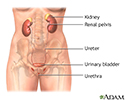
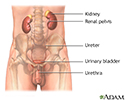
Frequent urination means needing to urinate more often than usual. Urgent urination is a sudden, strong need to urinate. This causes discomfort in your bladder. Urgent urination makes it difficult to delay passing your urine.
A need to urinate at night is called nocturia. Most people can sleep for 6 to 8 hours without having to urinate.

Causes
Common causes of these symptoms are:
- Urinary tract infection (UTI)
- Enlarged prostate in middle-aged and older men
- Swelling and infection of the urethra
- Vaginitis (swelling of or discharge from the vulva and vagina)
- Nerve related problems
- Caffeine intake


Less common causes include:
- Alcohol use
- Anxiety
- Bladder cancer (not common)
- Spine problems
- Diabetes that is not well controlled
- Pregnancy
- Interstitial cystitis
- Medicines such as water pills (diuretics)
- Overactive bladder syndrome
- Radiation therapy to the pelvis, which is used to treat certain cancers
- Stroke and other brain or nervous system diseases
- Tumor or growth in the pelvis


Home Care
Follow the advice of your health care provider to diagnose and treat the cause of the problem.
It may help to write down the times when you urinate and the amount of urine you produce. Bring this record to your visit with the provider. This is called a voiding diary.
In some cases, you may have problems controlling urine (urinary incontinence) for a period of time. You may need to take steps to protect your clothing and bedding.
For nighttime urination, avoid drinking too much fluid before going to bed. Cut down on the amount of liquids you drink that contain alcohol or caffeine.
When to Contact a Medical Professional
Contact your provider right away if:
- You have fever, back or side pain, vomiting, or shaking chills
- You have increased thirst or appetite, fatigue, or sudden weight loss
Also contact your provider if:
- You have urinary frequency or urgency, but you are not pregnant and you are not drinking large amounts of fluid.
- You have incontinence or you have changed your lifestyle because of your symptoms.
- You have bloody or cloudy urine.
- There is a discharge from the penis or vagina.
What to Expect at Your Office Visit
Your provider will take a medical history and do a physical exam.
Tests that may be done include:
- Urinalysis
- Urine culture
- Cystometry or urodynamic testing (a measurement of the pressure within the bladder and the flow of urine)
- Cystoscopy
- Nervous system tests (for some urgency problems)
- Ultrasound (such as an abdominal ultrasound or a pelvic ultrasound)


Treatment depends on the cause of the urgency and frequency. You may need to take antibiotics and medicine to ease your discomfort.
References
Gharavi AG, Landry DW. Approach to the patient with renal disease. In: Goldman L, Cooney KA, eds. Goldman-Cecil Medicine. 27th ed. Philadelphia, PA: Elsevier; 2024:chap 100.
Lentz GM, Miller JL. Lower urinary tract function and disorders: Physiology of micturition, voiding dysfunction, urinary incontinence, urinary tract infections, and painful bladder syndrome. In: Gershenson DM, Lentz GM, Valea FA, Lobo RA, eds. Comprehensive Gynecology. 8th ed. Philadelphia, PA: Elsevier; 2022:chap 21.
Sebesta EM, Reynolds WS. Overactive bladder. In: Dmochowski RR, Kavoussi LR, Peters CA, et al, eds. Campbell-Walsh-Wein Urology. 13th ed. Philadelphia, PA: Elsevier; 2026:chap 110.
Review Date: 4/19/2026
Reviewed By: Kelly L. Stratton, MD, FACS, Associate Professor, Department of Urology, University of Oklahoma Health Sciences Center, Oklahoma City, OK. Also reviewed by David C. Dugdale, MD, Medical Director, Brenda Conaway, Editorial Director, and the A.D.A.M. Editorial team.
© 1997- A.D.A.M., a business unit of Ebix, Inc. Any duplication or distribution of the information contained herein is strictly prohibited.
 All rights reserved.