

Lymph node culture
Culture - lymph node
Lymph node culture is a lab test done on a sample from a lymph node to identify germs that cause infection.
How the Test is Performed
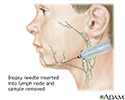
A sample is needed from a lymph node. The sample may be taken using a needle to draw fluid (aspiration) from the lymph node or during a lymph node biopsy.


The sample is sent to a lab. There, it is placed in a special dish and watched to see if bacteria, fungi, or viruses grow. This process is called a culture. Sometimes, special stains are also used to identify specific cells or microorganisms before culture results are available.
If needle aspiration does not provide a good enough sample, the entire lymph node may be removed and sent for culture and other testing.
How to Prepare for the Test
Your health care provider will instruct you on how to prepare for the lymph node sampling.
How the Test will Feel
When local anesthetic is injected, you will feel a prick and a mild stinging sensation. The site will likely be sore for a few days after the test.
Why the Test is Performed
Your provider may order this test if you have swollen glands and infection is suspected.
Normal Results
A normal result means there was no growth of microorganisms on the lab dish.
Normal value ranges may vary slightly among different labs. Talk to your provider about the meaning of your specific test results.
What Abnormal Results Mean
Abnormal results are a sign of a bacterial, fungal, mycobacterial, or viral infection.
Risks
Risks of collecting the lymph node sample may include:
- Bleeding
- Infection (in rare cases, the wound may get infected and you may need to take antibiotics)
- Nerve injury if the biopsy is done on a lymph node close to nerves (the numbness usually goes away in a few months)

References
Karan A, Pasternack MS. Lymphadenitis and lymphangitis. In: Blaser MJ, Cohen JI, Holland SM, et al, eds. Mandell, Douglas, and Bennett's Principles and Practice of Infectious Diseases. 10th ed. Philadelphia, PA: Elsevier; 2026:chap 97.
Winter JN. Approach to the patient with lymphadenopathy or splenomegaly. In: Goldman L, Cooney KA, eds. Goldman-Cecil Medicine. 27th ed. Philadelphia, PA: Elsevier; 2024:chap 154.
Review Date: 12/13/2025
Reviewed By: Jatin M. Vyas, MD, PhD, Roy and Diana Vagelos Professor in Medicine, Columbia University Vagelos College of Physicians and Surgeons, Division of Infectious Diseases, Department of Medicine, New York, NY. Also reviewed by David C. Dugdale, MD, Medical Director, Brenda Conaway, Editorial Director, and the A.D.A.M. Editorial team.
© 1997- A.D.A.M., a business unit of Ebix, Inc. Any duplication or distribution of the information contained herein is strictly prohibited.
 All rights reserved.