

Bile culture
Culture - bile
Bile culture is a laboratory test to detect disease-causing germs (bacteria, viruses, or fungi) in the biliary system.
How the Test is Performed
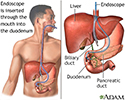
A sample of bile is needed. This can be done using different methods, including gallbladder surgery or a procedure called endoscopic retrograde cholangiopancreatography (ERCP).


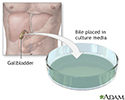
The bile sample is sent to a lab. There, it is placed in a special dish called a culture medium to see if bacteria, viruses, or fungi grow on the sample.
How to Prepare for the Test
The preparation depends on the specific method used to obtain the bile sample. Follow your health care provider's instructions exactly.
How the Test will Feel
If bile is taken during gallbladder surgery, you will feel no pain because you are asleep.
If bile is taken during ERCP, you will receive medicine to relax you. You may have some discomfort as the endoscope passes through your mouth, throat, and down the esophagus. This feeling will go away shortly. You may also be given medicine (anesthesia) so that you will sleep lightly for this test. If you are asleep, you will not feel any discomfort.
Why the Test is Performed
This test is done to detect infection within the biliary system. The biliary system creates, moves, stores, and releases bile to help in digestion.
Normal Results
The test result is normal if no bacteria, virus, or fungus grew in the laboratory dish.
Normal value ranges may vary slightly among different laboratories. Some labs use different measurements or may test different specimens. Talk to your provider about the meaning of your specific test results.
What Abnormal Results Mean
An abnormal result means bacteria, fungus, or a virus grew in the laboratory dish. This may be a sign of infection.
Risks
Risks depend on the method used to take a sample of the bile. Your provider can explain these risks.
References
Kim AY. Bacterial, parasitic, and fungal infections of the liver, including liver abscesses. In: Chung RT, Rubin DT, Wilcox CM, eds. Sleisenger and Fordtran's Gastrointestinal and Liver Disease. 12th ed. Philadelphia, PA: Elsevier; 2026:chap 86.
Wojewoda CM, Stempak LM. Medical bacteriology. In: McPherson RA, Pincus MR, eds. Henry's Clinical Diagnosis and Management by Laboratory Methods. 24th ed. Philadelphia, PA: Elsevier; 2022:chap 57.
Review Date: 7/22/2025
Reviewed By: Todd Eisner, MD, Private practice specializing in Gastroenterology in Boca Raton and Delray Beach, Florida at Gastroenterology Consultants of Boca Raton. Affiliate Assistant Professor, Florida Atlantic University School of Medicine. Review provided by VeriMed Healthcare Network. Also reviewed by David C. Dugdale, MD, Medical Director, Brenda Conaway, Editorial Director, and the A.D.A.M. Editorial team.
© 1997- A.D.A.M., a business unit of Ebix, Inc. Any duplication or distribution of the information contained herein is strictly prohibited.
 All rights reserved.