

Polyendocrine metabolic ovarian syndrome
Polycystic ovary syndrome; Polycystic ovaries; Polycystic ovary disease; Stein-Leventhal syndrome; Polyfollicular ovarian disease; PMOS
Polyendocrine metabolic ovarian syndrome (PMOS) is a condition that causes an imbalance in hormones in women. These hormone changes can cause problems with weight, reproduction, skin and other physical changes, and mental health. It can lead to health risks such as heart disease and diabetes.

PMOS was previously called polycystic ovary syndrome (PCOS). The name was changed to reflect the fact that PMOS is a complex condition that affects many systems in the body, not just the ovaries. The name PMOS more accurately describes how the condition affects women and may help lead to improved diagnosis and treatment.
Causes
PMOS is linked to changes in hormone levels within the body. The reasons for these changes are unclear. The hormones affected are:
- Estrogen and progesterone, which control ovulation and menstrual cycles
- Follicle-stimulating hormone (FSH) and luteinizing hormone (LH), which control how ovaries function
- Testosterone, a male hormone (also produced in women)
- Insulin, which regulates blood sugar
Women with PMOS have cycles where ovulation does not occur every month which may contribute to infertility The other symptoms of this disorder are due to the high levels of male hormones and the body not responding to insulin properly (insulin resistance).

Most of the time, PMOS is diagnosed in women in their 20s or 30s. However, it may also affect teenage girls. The symptoms often begin when a girl's periods start. Women with this disorder often have a mother or sister who has similar symptoms.
Symptoms
Symptoms of PMOS can vary from person to person. Some people with PMOS have no symptoms or only have minor symptoms. Some women discover that they have PMOS when they try to become pregnant. PMOS can cause symptoms in different systems within the body.
Menstrual and reproductive symptoms:
- Not getting a period after you have had one or more normal ones during puberty (secondary amenorrhea)
- Irregular periods that may come and go, and be very light to very heavy
- Pregnancy complications
- Increased number of small cysts in the ovaries (many women don't develop cysts)
- Infertility

Metabolic symptoms:
- Insulin resistance, with an increased risk of developing type 2 diabetes
- Weight gain and difficulty losing weight
- High cholesterol and high blood pressure
- Fatigue
- Sleep apnea


Mental health symptoms:
- Anxiety
- Depression
- Eating disorders

Hormonal and skin symptoms:
- Extra body hair that grows on the chest, belly, face, and around the nipples (hirsutiusm)
- Hair loss
- Acne on the face, chest, or back
- Skin changes, such as dark or thick skin markings and creases around the armpits, groin, neck, and breasts (acanthosis nigricans)
- Male characteristics (virilization), such as deepening of the voice
- Decrease in breast size and enlargement of the clitoris (rare)




The development of male characteristics is not typical of PCOS and may indicate another problem. The following changes may indicate another problem apart from PCOS:
- Thinning hair on the head at the temples, called male pattern baldness
Exams and Tests
Your health care provider will perform a physical exam. Your provider will check your weight and body mass index (BMI).
Blood tests can be done to check your hormone levels. These tests may include:
- Estrogen level
- FSH level
- LH level
- Male hormone (testosterone) level
- Progesterone level
- 17-hydroxyprogesterone

Other blood tests that may be done include:
- Fasting glucose (blood sugar) and other tests for glucose intolerance and insulin resistance
- Lipid level
- Pregnancy test (serum hCG)
- Prolactin level
- Thyroid function tests
- Hg A1c, fasting insulin
- C-reactive protein test


Your provider may also perform a pelvic exam or order an ultrasound of your pelvis to look at your ovaries.
Treatment
Your treatment is based on your symptoms and any health conditions related to PMOS.
Lifestyle changes are important tools to help you manage PMOS.
- Following a healthy diet
- Getting regular exercise
- Getting support through therapy or support groups to help manage anxiety or depression


Weight gain and obesity are common in women with PCOS. Losing even a small amount of weight can help treat:
- Improve how your body responds to insulin
- Reduce symptoms related to excess male hormones
- Help you have more regular periods
- Treat hormone changes
- Treat conditions such as diabetes, high blood pressure, or high cholesterol
In addition to lifestyle changes, you may be given a medicine to help with weight loss:
- GLP-1 agonists
- Phentermine and topiramate
- Orlistat
- Naltrexone and bupropion

Bariatric surgery may be an option depending on your body mass index (BMI) and other health risks if lifestyle changes and medicine don't work.
Your provider may prescribe birth control pills to make your periods more regular. These pills may also help reduce abnormal hair growth and acne if you take them for several months. Long-acting methods of contraception hormones, such as hormone releasing intrauterine devices (IUDs), may help to stop irregular periods and the abnormal growth of the uterine lining.


A diabetes medicine called metformin (Glucophage) may also be prescribed to:
- Make your periods regular
- Prevent type 2 diabetes
Other medicines that may be prescribed to help make your periods regular and help you get pregnant if you are trying are:
- LH-releasing hormone (LHRH) analogs
- Clomiphene citrate or letrozole, which may allow your ovaries to release eggs and improve your chance of pregnancy
These medicines work better if your body mass index (BMI) is 30 kilograms per square meter or less (below the obese range).
Your provider may also suggest other treatments for abnormal hair growth. Some are:
- Spironolactone or flutamide pills
- Eflornithine cream
Effective methods of hair removal include electrolysis and laser hair removal. However, many treatments may be needed. Treatments are expensive and the results are often not permanent.
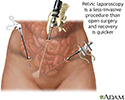
A pelvic laparoscopy may be done to remove or alter an ovary to treat infertility. This improves the chances of releasing an egg. The effects are temporary.
Outlook (Prognosis)
With treatment, women with PMOS are very often able to get pregnant. During pregnancy, there is an increased risk of:
- Miscarriage
- High blood pressure
- Gestational diabetes


Possible Complications
Women with PCOS are more likely to develop:
- Endometrial cancer
- Infertility
- Diabetes
- Obesity-related complications
- Cardiovascular disease
- Non-alcoholic fatty liver disease
- Sleep apnea

When to Contact a Medical Professional
Contact your provider if you have symptoms of this disorder.
References
Bulun SE, Babayev E. Physiology and pathology of the female reproductive axis. In: Melmed S, Auchus RJ, Goldfine AB, Rosen CJ, Kopp PA, eds. Williams Textbook of Endocrinology. 15th ed. Philadelphia, PA: Elsevier; 2025:chap 15.
Catherino WH. Reproductive endocrinology and infertility. In: Goldman L, Cooney KA, eds. Goldman-Cecil Medicine. 27th ed. Philadelphia, PA: Elsevier; 2024:chap 218.
Chen Z-J C, Legro RS, Ehrmann DA, Wei D. Androgen excess disorders in women. In: Robertson RP, ed. DeGroot's Endocrinology. 8th ed. Philadelphia, PA: Elsevier; 2023:chap 124.
Das B, Fatima, T. Importance of lifestyle modifications. In: Rehman R, Sheikh A, eds. Polycystic Ovary Syndrome: Basic Science to Clinical Advances Across the Lifespan. Philadelphia, PA: Elsevier; 2024:chap 21.
Lobo RA. Polycystic ovary syndrome. In: Gershenson DM, Lentz GM, Valea FA, Lobo RA, eds. Comprehensive Gynecology. 8th ed. Philadelphia, PA: Elsevier; 2022:chap 39.
Nadeem S, Altaf Hussain Merchant A. Pharmacologic management for polycystic ovary syndrome: Weight loss. In: Rehman R, Sheikh A, eds. Polycystic Ovary Syndrome: Basic Science to Clinical Advances Across the Lifespan. Philadelphia, PA: Elsevier; 2024:chap 16.
Teede H, Khomami M, Morman R, et al. Polyendocrine metabolic ovarian syndrome, the new name for polycystic ovary syndrome: a multistep global consensus process. Lancet. 2026 May 12:S0140-6736(26)00717-8. Epub ahead of print. PMID: 42119588. pubmed.ncbi.nlm.nih.gov/42119588/.
Endocrine glands - illustration
Endocrine glands
illustration
Pelvic laparoscopy - illustration
Pelvic laparoscopy
illustration
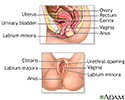
Female reproductive anatomy - illustration
Female reproductive anatomy
illustration
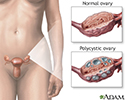
Stein-Leventhal syndrome - illustration
Stein-Leventhal syndrome
illustration
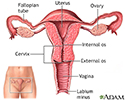
Uterus - illustration
Uterus
illustration
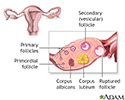
Follicle development - illustration
Follicle development
illustration
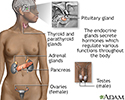
Endocrine glands - illustration
Endocrine glands
illustration
Pelvic laparoscopy - illustration
Pelvic laparoscopy
illustration
Female reproductive anatomy - illustration
Female reproductive anatomy
illustration
Stein-Leventhal syndrome - illustration
Stein-Leventhal syndrome
illustration
Uterus - illustration
Uterus
illustration
Follicle development - illustration
Follicle development
illustration
Review Date: 6/3/2026
Reviewed By: LaQuita Martinez, MD, Department of Obstetrics and Gynecology, Emory Johns Creek Hospital, Alpharetta, GA. Also reviewed by David C. Dugdale, MD, Medical Director, Brenda Conaway, Editorial Director, and the A.D.A.M. Editorial team.
© 1997- A.D.A.M., a business unit of Ebix, Inc. Any duplication or distribution of the information contained herein is strictly prohibited.
 All rights reserved.