

Myocardial contusion
Blunt myocardial injury
Myocardial contusion is a bruise of the heart muscle.
Causes
The most common causes are:
- Car accidents
- Getting hit by a car
- Cardiopulmonary resuscitation (CPR)
- Falling from a height, most often greater than 20 feet (6 meters)
Symptoms
A severe myocardial contusion may lead to signs and symptoms of a heart attack.
Symptoms can include:
- Pain in the front of the ribs or breastbone
- Feeling that your heart is racing
- Lightheadedness
- Nausea or vomiting
- Shortness of breath
- Weakness


Exams and Tests
The health care provider will perform a physical exam. This may show:
- Bruising or scrapes on the chest wall
- Crunching sensation when touching the skin if there are rib fractures and puncture of the lung
- Fast heartbeat
- Irregular heartbeat
- Low blood pressure
- Rapid or shallow breathing
- Tenderness to the touch
- Abnormal chest wall movement from rib fractures


Tests may include:
- Blood tests (cardiac enzymes, such as Troponin-I or T or CKMB)
- Chest x-ray
- CT scan of the chest
- Electrocardiogram (ECG)
- Echocardiogram


These tests may show:
- Problems with the heart wall and the ability for the heart to contract
- Fluid or blood in the thin sac surrounding the heart (pericardium)
- Rib fractures
- Lung or blood vessel injury
- Problem with the heart's electrical signaling (such as a bundle branch block or other heart block)
- Fast heartbeat starting at the sinus node of the heart (sinus tachycardia)
- Abnormal heartbeat starting in the ventricles or lower chambers of the heart (ventricular dysrhythmia)

Treatment
In most cases, you will be closely monitored for at least 24 hours. An ECG will be done continually to check your heartbeat and function.
Emergency room treatment may include:
- Catheter placement through a vein (IV)
- Medicines to relieve pain, heart rate disturbances, or low blood pressure
- Pacemaker (temporary, may be permanent later)
- Oxygen
Other therapies may be used to treat a heart injury, include:
- Chest tube placement
- Draining blood from around the heart
- Surgery to repair blood vessels in the chest
Outlook (Prognosis)
People with a mild myocardial contusion will recover completely most of the time.
Serious heart injuries can increase your risk for heart failure or heart rhythm problems.
Prevention
The following safety tips may help prevent a heart bruise:
- Wear a seat belt when driving.
- Choose a car with air bags.
- Take steps to ensure safety when working at heights.
References
Boccalandro F, Shreyder K. Traumatic heart disease. In: Levine GN, ed. Cardiology Secrets. 6th ed. Philadelphia, PA: Elsevier; 2023:chap 72.
Chung CY, Scalea TM. Initial assessment and resuscitation of the trauma patient. In: Cameron JL, Cameron AM, eds. Current Surgical Therapy. 15th ed. Philadelphia, PA: Elsevier; 2026:chap 197.
Raja AS. Thoracic trauma. In: Walls RM, ed. Rosen's Emergency Medicine: Concepts and Clinical Practice. 10th ed. Philadelphia, PA: Elsevier; 2023:chap 37.
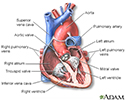
Heart - section through the middle - illustration
Heart - section through the middle
illustration
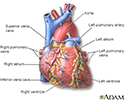
Heart - front view - illustration
Heart - front view
illustration
Review Date: 4/28/2026
Reviewed By: Michael A. Chen, MD, PhD, Associate Professor of Medicine, Division of Cardiology, Harborview Medical Center, University of Washington Medical School, Seattle, WA. Also reviewed by David C. Dugdale, MD, Medical Director, Brenda Conaway, Editorial Director, and the A.D.A.M. Editorial team.
© 1997- A.D.A.M., a business unit of Ebix, Inc. Any duplication or distribution of the information contained herein is strictly prohibited.
 All rights reserved.