

Health Library
Substance use disorder
Substance misuse; Chemical use; Chemical misuse; Drug addiction; Addiction - drug; Dependence on drugs; Illicit drug use; Narcotic use; Hallucinogen use
Substance use disorder occurs when a person's use of alcohol or another substance (prescribed medicine or illegal drug) leads to health issues or problems at work, school, or home.
This disorder is also called substance misuse. It was previously called substance abuse.
Images
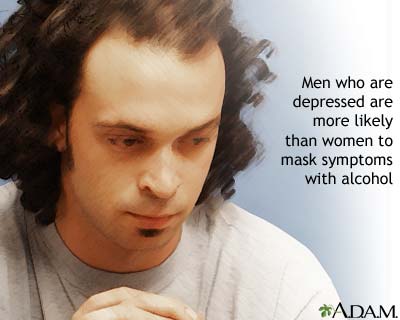
I Would Like to Learn About:
Causes
The exact cause of substance use disorder is not known. A person's genes, the action of the prescribed medicine or illegal drug, peer pressure, emotional distress, anxiety, depression, and environmental stress can all be factors.
Many who develop a substance use problem have depression, attention deficit hyperactivity disorder (ADHD), post-traumatic stress disorder (PTSD), or another mental health issue. A stressful or chaotic lifestyle and low self-esteem are also common.
Children who grow up seeing their parents misuse substances may have a high risk of developing a substance use problem later in life for both environmental and genetic reasons.
Commonly used substances include:
- Opioids and other narcotics are powerful painkillers that can cause drowsiness, and sometimes intense feelings of well-being, elation, happiness, excitement, and joy. These include heroin, opium, codeine, and narcotic pain medicines that may be prescribed by a health care provider or acquired illegally.
- Stimulants are substances that stimulate the brain and nervous system. They include cocaine, amphetamines, and some medicines used to treat ADHD (such as methylphenidate or Ritalin). A person can start needing higher amounts of these substances over time to feel the same effect.
- Depressants cause drowsiness and reduce anxiety. They include alcohol, barbiturates, benzodiazepines (Valium, Ativan, Xanax), chloral hydrate, and paraldehyde. Using these substances can lead to addiction.
- LSD, mescaline, psilocybin ("mushrooms"), and phencyclidine (PCP, or "angel dust") can cause a person to see things that are not there (hallucinations) and can lead to psychological addiction.
- Marijuana (cannabis, or hashish).
There are several stages of substance use that may lead to addiction. Young people seem to move more quickly through the stages than do adults. Stages are:
- Experimental use -- Typically involves peers, done for recreational use; the user may enjoy defying parents or other authority figures.
- Regular use -- The user misses more and more school or work; worries about losing substance supplier; uses substances to fix negative feelings; begins to stay away from friends and family; may change friends to those who are regular users; shows increased tolerance and ability to handle the substance.
- Problem or risky use -- The user loses any motivation; does not care about school and work; has obvious behavior changes; thinking about substance use is more important than all other interests, including relationships; the user becomes secretive; may begin dealing substances to help support habit; use of other, harder substances may increase; legal problems may increase.
- Addiction -- Cannot face daily life without substance; denies problem; physical condition gets worse; loss of control over use; may become suicidal; financial and legal problems get worse; may have broken ties with family members or friends.
Symptoms
Substance use disorders exist on a spectrum from mild to severe. Common signs that substance use has become a problem (substance use disorder) include:
- Loss of control: Using more of the substance than intended or being unable to cut down despite wanting to.
- Cravings: A strong, persistent urge or desire to use the substance.
- Tolerance: Needing more of the substance over time to achieve the same effect.
- Withdrawal: Experiencing physical or psychological symptoms when the substance is reduced or stopped.
- Neglect of responsibilities: Continued use despite it causing significant problems in personal relationships, work, school, or health.
- Risky use: Continuing to use the substance even when it puts you or others in physical danger.
Symptoms and behaviors of substance use may include:
- Confusion
- Continuing to use substances, even when health, work, or family are being harmed
- Episodes of violence
- Hostility when confronted about substance use or misuse
- Lack of control over substance misuse, being unable to stop or reduce substance intake
- Making excuses to use substances
- Missing work or school, or a decrease in performance
- Need for daily or regular substance use to function
- Neglecting to eat
- Not caring about physical appearance
- No longer taking part in activities because of substance misuse
- Secretive behavior to hide substance use
- Using substances even when alone
Exams and Tests
Drug tests (toxicology screens) on blood and urine samples can show many chemicals and substances in the body. How sensitive the test is depends on the substance itself, when the substance was used, and the testing laboratory. Blood tests are more likely to find a substance than urine tests, though urine substance screens are done more often.
Treatment
Substance use disorder is a serious condition and not easy to treat. The best care and treatment involve trained professionals.
Treatment begins with recognizing the problem. Though denial is a common symptom of addiction, people who are addicted have far less denial if they are treated with empathy and respect, rather than told what to do or being confronted.
Treatment for substance use disorders is individualized and may involve a combination of approaches:
- Behavioral Therapies: Counseling, such as Cognitive Behavioral Therapy (CBT) or Motivational Interviewing, helps individuals identify triggers, develop coping skills, and change patterns of behavior.
- Medication: For certain substances (such as alcohol, opioids, or nicotine), FDA-approved medications can help reduce cravings and manage withdrawal symptoms.
- Support Groups: Peer-led groups or formal recovery programs provide ongoing social support and accountability
The substance may either be slowly withdrawn or stopped abruptly. Support for physical and emotional symptoms, as well as staying substance free (abstinence) are also key to treatment.
People with substance overdose may need emergency treatment in the hospital. The exact treatment depends on the drug used.
Detoxification (detox) is the withdrawal of the substance abruptly in an environment where there is good support. Detoxification can be done on an inpatient or outpatient basis.
At times, another substance with a similar action or effect on the body is taken, as the dose is slowly decreased to reduce the side effects and risks of withdrawal. For example, for opioid use disorder, methadone or similar medicines may be used to prevent withdrawal and continued use.
Residential treatment programs and intensive outpatient programs monitor and address possible withdrawal symptoms and behaviors. These programs use techniques to get users to recognize their behaviors and learn how not to go back to using (relapse).
If the person also has depression or another mental health issues, it should be treated. In many cases, a person starts using substances to try to self-treat mental health illness.
Support Groups
Many support groups are available in the community. They include:
- Narcotics Anonymous (NA) -- www.na.org
- Alateen -- al-anon.org/for-members/group-resources/alateen/
- Al-Anon -- al-anon.org
Most of these groups follow the 12-Step program used in Alcoholics Anonymous (AA) www.aa.org.
SMART Recovery www.smartrecovery.org and Life Ring Secular Recovery www.lifering.org are programs that do not use the 12-step approach. You can find other support groups on the Internet.
Outlook (Prognosis)
Substance use may lead to a fatal overdose. Some people start taking the substances again (relapse) after they have stopped.
Complications of substance use include:
- Depression
- Cancer, for example, mouth and stomach cancer are linked to alcohol use and dependence
- Infection with HIV, or hepatitis B or C through shared needles
- Loss of job
- Problems with memory and concentration, for example, hallucinogen use, including marijuana (THC)
- Problems with the law
- Relationship breakup
- Unsafe sexual practices, which may result in unwanted pregnancies, sexually transmitted diseases, HIV, or viral hepatitis
When to Contact a Medical Professional
Make an appointment with your provider if you or a family member is using a substance and wants to stop. Also contact your provider if you have been cut off from your drug supply and are at risk of withdrawal. Many employers offer referral services for their employees with substance use problems.
If you or someone you know is thinking about suicide, call or text 988 or chat 988lifeline.org. You can also call 1-800-273-8255 (1-800-273-TALK). The 988 Suicide and Crisis Lifeline provides free and confidential support 24/7, anytime day or night.
You can also call 911 or the local emergency number or go to the hospital emergency room. DO NOT delay.
If someone you know has attempted suicide, call 911 or the local emergency number right away. DO NOT leave the person alone, even after you have called for help.
Prevention
Substance education programs can be helpful. Parents can have a strong influence on their children by teaching them about the harm of using substances.
Related Information
Substance useDrug use first aid
Stress and your health
Depression
Unconsciousness - first aid
Toxicology screen
Central nervous system
Hepatitis
Thrombophlebitis
Pulmonary embolus
References
American Psychiatric Association. Substance-related and addictive disorders. Diagnostic and Statistical Manual of Mental Disorders. 5th ed. Text Revision (DSM-5-TR), Washington, DC: American Psychiatric Association Publishing; 2022.
Breuner CC. Substance use disorder. In: Kliegman RM, St. Geme JW, Blum NJ, et al, eds. Nelson Textbook of Pediatrics. 22nd ed. Philadelphia, PA: Elsevier; 2025:chap 157.
Nisavic M. Substance use disorders. In: Stern TA, Wilens TE, Fava M, eds. Massachusetts General Hospital Comprehensive Clinical Psychiatry. 3rd ed. Philadelphia, PA: Elsevier; 2025:chap 26.
Weiss RD, Liebschutz JM. Drug use disorders. In: Goldman L, Cooney KA, eds. Goldman-Cecil Medicine. 27th ed. Philadelphia, PA: Elsevier; 2024:chap 365.
BACK TO TOPReview Date: 5/15/2026
Reviewed By: Fred K. Berger, MD, DLFAPA, board-certified in psychiatry, Scripps Memorial Hospital, La Jolla, CA. Also reviewed by David C. Dugdale, MD, Medical Director, Brenda Conaway, Editorial Director, and the A.D.A.M. Editorial team.
 | A.D.A.M., Inc. is accredited by URAC, for Health Content Provider (www.urac.org). URAC's accreditation program is an independent audit to verify that A.D.A.M. follows rigorous standards of quality and accountability. A.D.A.M. is among the first to achieve this important distinction for online health information and services. Learn more about A.D.A.M.'s editorial policy, editorial process and privacy policy. A.D.A.M. is also a founding member of Hi-Ethics. This site complies with the HONcode standard for trustworthy health information: verify here. |
The information provided herein should not be used during any medical emergency or for the diagnosis or treatment of any medical condition. A licensed medical professional should be consulted for diagnosis and treatment of any and all medical conditions. Links to other sites are provided for information only -- they do not constitute endorsements of those other sites. No warranty of any kind, either expressed or implied, is made as to the accuracy, reliability, timeliness, or correctness of any translations made by a third-party service of the information provided herein into any other language.
© 1997-
2026 A.D.A.M., a business unit of Ebix, Inc. Any duplication or distribution of the information contained herein is strictly prohibited.
All content on this site including text, images, graphics, audio, video, data, metadata, and compilations is protected by copyright and other intellectual property laws. You may view the content for personal, noncommercial use. Any other use requires prior written consent from Ebix. You may not copy, reproduce, distribute, transmit, display, publish, reverse-engineer, adapt, modify, store beyond ordinary browser caching, index, mine, scrape, or create derivative works from this content. You may not use automated tools to access or extract content, including to create embeddings, vectors, datasets, or indexes for retrieval systems. Use of any content for training, fine-tuning, calibrating, testing, evaluating, or improving AI systems of any kind is prohibited without express written consent. This includes large language models, machine learning models, neural networks, generative systems, retrieval-augmented systems, and any software that ingests content to produce outputs. Any unauthorized use of the content including AI-related use is a violation of our rights and may result in legal action, damages, and statutory penalties to the fullest extent permitted by law. Ebix reserves the right to enforce its rights through legal, technological, and contractual measures.
