

Muscle atrophy
Muscle wasting; Wasting; Atrophy of the muscles
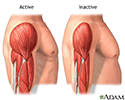
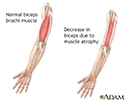
Muscle atrophy is the wasting (thinning) or loss of muscle tissue.
Causes
There are three types of muscle atrophy: physiologic, pathologic, and neurogenic.
Physiologic atrophy is caused by not using the muscles enough. This type of atrophy can often be reversed with exercise and better nutrition. People who are most affected are those who:
- Have seated jobs, health problems that limit movement, or decreased activity levels
- Are bedridden
- Cannot move their limbs normally because of stroke, other brain disease, or orthopedic problems
- Are in a place that lacks gravity, such as during space flights
Pathologic atrophy is seen with aging, starvation, and diseases such as Cushing disease (because of taking too much medicines called corticosteroids or having overactive adrenal glands).
Neurogenic atrophy is the most severe type of muscle atrophy. It can be from an injury to, or disease of a nerve that connects to the muscle. This type of muscle atrophy tends to occur more suddenly than physiologic atrophy.
Examples of diseases affecting the nerves that control muscles:
- Amyotrophic lateral sclerosis (ALS, or Lou Gehrig disease)
- Damage to a single nerve, such as carpal tunnel syndrome
- Guillain-Barré syndrome
- Nerve damage (neuropathy) caused by injury, diabetes, toxins, or alcohol
- Polio (poliomyelitis)
- Spinal cord injury


Although people can adapt to muscle atrophy, even minor muscle atrophy causes some loss of movement or strength.
Other causes of muscle atrophy may include:
- Burns
- Long-term corticosteroid therapy
- Malnutrition
- Muscular dystrophy and other diseases of the muscle
- Osteoarthritis
- Rheumatoid arthritis



Home Care
An exercise program may help treat muscle atrophy. Exercises may include ones done in a swimming pool to reduce the muscle workload, and other types of rehabilitation. Your health care provider can tell you more about this.
People who cannot actively move one or more joints can do exercises using braces or splints.

When to Contact a Medical Professional
Contact your provider for an appointment if you have unexplained or long-term muscle loss. You can often see this when you compare one hand, arm, or leg to the other.
What to Expect at Your Office Visit
Your provider will perform a physical exam and ask about your medical history and symptoms, including:

- When did the muscle atrophy begin?
- Is it getting worse?
- What other symptoms do you have?
Your provider will look at your arms and legs and measure muscle size. This may help determine which nerves are affected.
Tests that may be performed include:
- Blood tests
- CT scans
- Electromyography (EMG)
- MRI scans
- Muscle or nerve biopsy
- Nerve conduction studies
- X-rays
- Diagnostic muscle ultrasound
- Genetic testing


Treatment may include physical therapy, ultrasound therapy and, in some cases, surgery to correct a contracture.

References
Ball JW, Dains JE, Flynn JA, Solomon BS, Stewart RW. Musculoskeletal system. In: Ball JW, Dains JE, Flynn JA, Solomon BS, Stewart RW, eds. Seidel's Guide to Physical Examination. 10th ed. St Louis, MO: Elsevier; 2023:chap 22.
Borg K, Ensrud E. Myopathies. In: Frontera WR, Silver JK, Rizzo TD Jr, eds. Essentials of Physical Medicine and Rehabilitation: Musculoskeletal Disorders, Pain, and Rehabilitation. 4th ed. Philadelphia, PA: Elsevier; 2019:chap 136.
Doughty CT, Amato AA. Disorders of skeletal muscle. In: Jankovic J, Mazziotta JC, Pomeroy SL, Newman NJ, eds. Bradley and Daroff's Neurology in Clinical Practice. 8th ed. Philadelphia, PA: Elsevier; 2022:chap 109.
Selcen D. Muscle diseases. In: Goldman L, Cooney KA, eds. Goldman-Cecil Medicine. 27th ed. Philadelphia, PA: Elsevier; 2024:chap 389.
Review Date: 10/27/2025
Reviewed By: Joseph V. Campellone, MD, Department of Neurology, Cooper Medical School at Rowan University, Camden, NJ. Review provided by VeriMed Healthcare Network. Also reviewed by David C. Dugdale, MD, Medical Director, Brenda Conaway, Editorial Director, and the A.D.A.M. Editorial team.
© 1997- A.D.A.M., a business unit of Ebix, Inc. Any duplication or distribution of the information contained herein is strictly prohibited.
 All rights reserved.