

Selective deficiency of IgA
IgA deficiency; Immunodepressed - IgA deficiency; Immunosuppressed - IgA deficiency; Hypogammaglobulinemia - IgA deficiency; Agammaglobulinemia - IgA deficiency
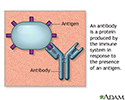
Selective deficiency of IgA is the most common immune deficiency disorder. People with this disorder have a low or absent level of a blood protein called immunoglobulin A.

Causes
Selective IgA deficiency is usually inherited, which means it is passed down through families. However, there are also cases of drug-induced selective IgA deficiency.
It may be inherited as an autosomal dominant or autosomal recessive trait. It is usually found in people of European origin. It is less common in people of other ethnicities.


Symptoms
Many people with selective IgA deficiency have no symptoms.
If a person does have symptoms, they may include frequent episodes of:
- Bronchitis (airway infection)
- Chronic diarrhea
- Conjunctivitis (eye infection)
- Gastrointestinal inflammation, including ulcerative colitis, Crohn disease, and a sprue-like illness
- Mouth infection
- Otitis media (middle ear infection)
- Pneumonia (lung infection)
- Sinusitis (sinus infection)
- Skin infections
- Upper respiratory tract infections




Other symptoms include:
- Bronchiectasis (a disease in which the bronchial tubes in the lungs become damaged and enlarged)
- Asthma without a known cause
Exams and Tests
There may be a family history of IgA deficiency. Tests that may be done include:
- IgG subclass measurements
- Quantitative immunoglobulin blood levels
- Serum immunoelectrophoresis
- Antibody titers after vaccination

Treatment
No specific treatment is available. Some people gradually develop normal levels of IgA without treatment.
Management involves taking steps to reduce the number and severity of infections. Antibiotics are often needed to treat bacterial infections. Getting the recommended vaccines can help prevent infections in people with IgA deficiency.
For people with more frequent or severe infections, immunoglobulins might be given through a vein or by injection to boost the immune system. However, these immunoglobulins do not replace IgA.
Autoimmune disease treatment is based on the specific problem.
Note: People with complete IgA deficiency may develop anti-IgA antibodies if given blood products and immunoglobulins. This may lead to allergies or life-threatening anaphylactic shock. However, they can safely be given IgA-depleted immunoglobulins.


Outlook (Prognosis)
Selective IgA deficiency tends to be less severe than many other immunodeficiency diseases.
Many people with selective IgA deficiency have no symptoms at all. Some people with IgA deficiency will recover on their own and produce IgA in larger quantities over a period of years.
Possible Complications
Autoimmune disorders such as rheumatoid arthritis, systemic lupus erythematosus, and celiac disease may develop.


People with IgA deficiency may develop antibodies to IgA. As a result, they can have severe, even life-threatening reactions to transfusions of blood and blood products.
When to Contact a Medical Professional
People with IgA deficiency should contact their health care provider if they are having symptoms of an infection or intestinal symptoms.
Prevention
Genetic counseling may be of value to prospective parents with a family history of selective IgA deficiency.

References
Buckley RH, Orange JS. Primary immunodeficiency diseases. In: Burks AW, Holgate ST, O'Hehir RE, et al, eds. Middleton's Allergy: Principles and Practice. 9th ed. Philadelphia, PA: Elsevier; 2020:chap 69.
Cunningham-Rundles C. Primary immunodeficiency diseases. In: Goldman L, Cooney KA, eds. Goldman-Cecil Medicine. 27th ed. Philadelphia, PA: Elsevier; 2024:chap 231.
Hernandez-Trujillo VP, Ortega C. B-cell and antibody deficiencies. In: Kliegman RM, St. Geme JW, Blum NJ, et al, eds. Nelson Textbook of Pediatrics. 22nd ed. Philadelphia, PA: Elsevier; 2025:chap 166.
Review Date: 1/20/2026
Reviewed By: Deborah Pedersen, MD, MS, Allergy & Asthma Care, PC, Taunton, MA. Review provided by VeriMed Healthcare Network. Also reviewed by David C. Dugdale, MD, Medical Director, Brenda Conaway, Editorial Director, and the A.D.A.M. Editorial team.
© 1997- A.D.A.M., a business unit of Ebix, Inc. Any duplication or distribution of the information contained herein is strictly prohibited.
 All rights reserved.