

Paronychia
Infection - skin around the nail
Paronychia is a skin infection that occurs around the nails.
Causes
Paronychia is a common condition. It is from injury to the area, such as biting off or picking a hangnail or from trimming or pushing back the cuticle.
The infection may be caused by:
- Bacteria
- Candida, a type of yeast
- Other types of fungi
A bacterial and fungal infection can occur at the same time.
Fungal paronychia may occur in people who:
- Have a fungal nail infection
- Have diabetes
- Expose their hands to water a lot


Symptoms
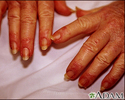
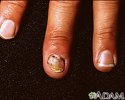
The main symptom is a painful, red, swollen area around the nail, often at the cuticle or at the site of a hangnail or other injury. There may be pus-filled blisters, especially with a bacterial infection.

Bacteria cause the condition to come on suddenly. If all or part of the infection is due to a fungus, it tends to occur more slowly.
Nail changes may occur. For example, the nail may look detached, abnormally shaped, or have an unusual color.
If the infection spreads to the rest of the body, symptoms may include:
- Fever, chills
- Development of red streaks along the skin
- General ill feeling
- Joint pain
- Muscle pain
Exams and Tests
Your health care provider can usually diagnose this condition by simply looking at the sore skin.
Pus or fluid may be drained and sent to a lab to determine what type of bacteria or fungus is causing the infection.
Treatment
If you have paronychia, soaking your nail in warm water 2 or 3 times a day helps reduce swelling and pain.
Your provider may prescribe oral antibiotics. In severe cases, your provider may cut and drain the sore with a sharp instrument. Part of the nail may need to be removed.
If you have chronic fungal paronychia, your provider may prescribe antifungal medicine.
Outlook (Prognosis)
Paronychia often responds well to treatment. But, fungal infections may last for several months.
Possible Complications
Complications are rare, but may include:
- Abscess
- Permanent changes in the shape of the nail
- Spread of infection to tendons, bones, or bloodstream

When to Contact a Medical Professional
Contact your provider if:
- Paronychia symptoms continue despite treatment
- Symptoms worsen or new symptoms develop
Prevention
To prevent paronychia:
- Care for your nails and the skin around your nails properly.
- Avoid damaging your nails or fingertips. Because the nails grow slowly, an injury can last for months.
- Do not bite or pick your nails.
- Protect your nails from exposure to detergents and chemicals by using rubber or plastic gloves. Gloves with cotton liners are best.
- Bring your own manicure tools to nail salons. Do not allow the manicurist to work on your cuticles.
To minimize the risk for damage to your nails:
- Keep fingernails smooth and trim them weekly.
- Trim toenails about once a month.
- Use sharp manicure scissors or clippers for trimming fingernails and toenails, and an emery board for smoothing the edges.
- Trim nails after bathing, when they are softer.
- Trim fingernails with a slightly rounded edge. Trim toenails straight across and do not cut them too short.
- Do not trim cuticles or use cuticle removers. Cuticle removers can damage the skin around the nail. The cuticle is needed to seal the space between the nail and skin. Trimming the cuticle weakens this seal, which can allow germs to enter the skin and lead to infection.
References
Dinulos JGH. Nail diseases. In: Dinulos JGH, ed. Habif's Clinical Dermatology. 7th ed. Philadelphia, PA: Elsevier; 2021:chap 25.
James WD. Bacterial infections. In: James WD, ed. Andrews' Diseases of the Skin. 14th ed. Philadelphia, PA: Elsevier; 2026:chap 12.
Richert B, Rich P. Nail surgery. In: Bolognia JL, Schaffer JV, Cerroni L, eds. Dermatology. 5th ed. Philadelphia, PA: Elsevier; 2025:chap 149.
Paronychia - candidial - illustration
Paronychia - candidial
illustration
Nail infection - candidal - illustration
Nail infection - candidal
illustration
Review Date: 4/1/2025
Reviewed By: Elika Hoss, MD, Assistant Professor of Dermatology, Mayo Clinic, Scottsdale, AZ. Also reviewed by David C. Dugdale, MD, Medical Director, Brenda Conaway, Editorial Director, and the A.D.A.M. Editorial team.
© 1997- A.D.A.M., a business unit of Ebix, Inc. Any duplication or distribution of the information contained herein is strictly prohibited.
 All rights reserved.