

Acute myeloid leukemia - adult
Acute myelogenous leukemia; AML; Acute granulocytic leukemia; Acute nonlymphocytic leukemia (ANLL); Leukemia - acute myeloid (AML); Leukemia - acute granulocytic; Leukemia - nonlymphocytic (ANLL)
Acute myeloid leukemia (AML) is cancer that starts inside bone marrow. This is the soft tissue in the center of bones that helps form all blood cells. The cancer grows from cells that would normally turn into white blood cells.
Acute means the disease grows quickly and usually has an aggressive course.
Causes
AML is one of the most common types of leukemia among adults.

AML is slightly more common in men than women.
The bone marrow makes blood components. These components help fight infection and stop bleeding. People with AML have many abnormal immature white blood cells inside their bone marrow. The cells grow very quickly, and replace healthy blood cells. As a result, people with AML are more likely to have infections. They also have an increased risk of bleeding as the numbers of healthy blood elements known as platelets decrease.
Most of the time, your health care provider cannot tell you what caused AML. However, the following things can lead to some types of leukemia, including AML:
- Blood disorders, including polycythemia vera, essential thrombocythemia, and myelodysplasia
- Certain chemotherapy medicines, including etoposide and medicines known as alkylating agents
- Exposure to certain chemicals (such as benzene) and harmful substances
- Radiation
- Weak immune system due to an organ transplant


Problems with your genes may also cause AML to develop.
Symptoms
Symptoms of AML are mainly due to the effects on blood elements. Symptoms of AML may include any of the following:
- Bleeding from the nose
- Bleeding and swelling (rare) in the gums
- Bruising
- Bone pain or tenderness
- Fever and fatigue
- Heavy menstrual periods
- Pale skin
- Shortness of breath (gets worse with exercise)
- Weight loss


Exams and Tests
Your provider will perform a physical exam. There may be signs of a swollen spleen, liver, or lymph nodes. Tests done include:
- A complete blood count (CBC) may show anemia and a low number of platelets. A white blood cell count (WBC) can be high, low, or normal.
- Bone marrow aspiration and biopsy will show if there are any leukemia cells.


If your provider learns you do have this type of leukemia, further tests will be done to determine the specific type of AML. Subtypes are based on specific changes in genes (mutations) and how the leukemia cells appear under the microscope.
Treatment
Treatment involves using medicines (chemotherapy) to kill the cancer cells. Most types of AML are treated with more than one chemotherapy medicine. Drugs that are targeted to specific mutations in the leukemic cells are also often used.
Chemotherapy kills normal cells, too. This may cause side effects such as:
- Increased risk of bleeding
- Increased risk for infection (your provider may want you to keep away from other people to prevent infection)
- Weight loss (you will need to eat extra calories)
- Mouth sores
Other supportive treatments for AML may include:
- Antibiotics to treat infection
- Red blood cell transfusions to fight anemia
- Platelet transfusions to control bleeding

A bone marrow (stem cell) transplant may be tried. This decision is decided by several factors, including:
- Your age and overall health
- Certain genetic changes in the leukemia cells
- The availability of donors
Support Groups
You can ease the stress of illness by joining a cancer support group. Sharing with others who have common experiences and problems can help you not feel alone.
Outlook (Prognosis)
When a bone marrow biopsy shows no evidence of AML, you are said to be in remission. How well you do depends on your overall health and the genetic subtype of the AML cells.
Remission is not the same as a cure. More therapy is usually needed, either in the form of more chemotherapy or a bone marrow transplant.
With treatment, younger people with AML tend to do better than those who develop the disease at an older age. The 5-year survival rate is much lower in older adults than in younger people. Experts say this is partly due to the fact that younger people are better able to tolerate strong chemotherapy medicines. Also, leukemia in older people tends to be more resistant to current treatments.
If the cancer does not come back (relapse) within 5 years of the diagnosis, you are likely cured.
When to Contact a Medical Professional
Contact your provider to schedule an appointment if you:
- Develop symptoms of AML
- Have AML and have a fever that will not go away or other signs of infection
Prevention
If you work around radiation or chemicals linked to leukemia, always wear protective gear.
References
Appelbaum FR. Acute leukemias in adults. In: Niederhuber JE, Armitage JO, Kastan MB, Doroshow JH, Tepper JE, eds. Abeloff's Clinical Oncology. 6th ed. Philadelphia, PA: Elsevier; 2020:chap 95.
Erba HP. Clinical manifestations and treatment of acute myeloid leukemia. In: Hoffman R, Benz EJ, Silberstein LE, et al, eds. Hematology: Basic Principles and Practice. 8th ed. Philadelphia, PA: Elsevier; 2023:chap 60.
National Cancer Institute website. Acute myeloid leukemia treatment (PDQ) -- health professional version. www.cancer.gov/types/leukemia/hp/adult-aml-treatment-pdq. Updated March 14, 2025. Accessed May 21, 2026.
Walter RB, Appelbaum FR. The acute leukemias. In: Goldman L, Cooney KA, eds. Goldman-Cecil Medicine. 27th ed. Philadelphia, PA: Elsevier; 2024:chap 168.
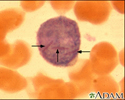
Auer rods - illustration
Auer rods
illustration
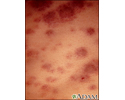
Acute monocytic leukemia - skin - illustration
Acute monocytic leukemia - skin
illustration
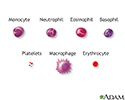
Blood cells - illustration
Blood cells
illustration
Review Date: 5/1/2026
Reviewed By: Warren Brenner, MD, Oncologist, Lynn Cancer Institute, Boca Raton, FL. Review provided by VeriMed Healthcare Network. Also reviewed by David C. Dugdale, MD, Medical Director, Brenda Conaway, Editorial Director, and the A.D.A.M. Editorial team.
© 1997- A.D.A.M., a business unit of Ebix, Inc. Any duplication or distribution of the information contained herein is strictly prohibited.
 All rights reserved.