

Health Library
Drug-induced low blood sugar
Hypoglycemia - drug-induced; Low blood glucose - drug-induced
Drug-induced low blood sugar is low blood glucose that results from taking medicine.
Images
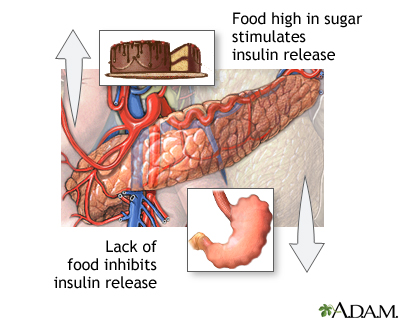
I Would Like to Learn About:
Causes
Low blood sugar (hypoglycemia) is common in people with diabetes who are taking insulin or other medicines to control their diabetes.
Other than certain medicines, the following can also cause blood sugar (glucose) level to drop:
- Drinking alcohol
- Getting more activity than usual
- Intentionally or unintentionally overdosing on the medicines used to treat diabetes
- Missing meals
Even when diabetes is managed very carefully, the medicines used to treat diabetes can result in drug-induced low blood sugar. The condition may also occur when someone without diabetes takes a medicine used to treat diabetes. In rare cases, non-diabetes-related medicines can cause low blood sugar.
Medicines that can cause drug-induced low blood sugar include:
- Beta-blockers (such as atenolol, or propranolol overdose)
- Cibenzoline and quinidine (heart arrhythmia medicines)
- Glinides (such as nateglinide and repaglinide)
- Indomethacin (a pain reliever)
- Insulin
- Metformin when used with sulfonylureas
- SGLT2 inhibitors (such as canagliflozin, dapagliflozin, empagliflozin and ertugliflozin) with or without sulfonylureas
- Sulfonylureas (such as glipizide, glimepiride, glyburide)
- Thiazolidinediones (such as pioglitazone and rosiglitazone) when used with sulfonylureas
- Drugs that fight infections (such as gatifloxacin, levofloxacin, pentamidine, quinine, trimethoprim-sulfamethoxazole)
References
Hussain K. Hypoglycemia. In: Goldman L, Cooney KA, eds. Goldman-Cecil Medicine. 27th ed. Philadelphia, PA: Elsevier; 2024:chap 211.
BACK TO TOPReview Date: 10/27/2024
Reviewed By: Laura J. Martin, MD, MPH, ABIM Board Certified in Internal Medicine and Hospice and Palliative Medicine, Atlanta, GA. Also reviewed by David C. Dugdale, MD, Medical Director, Brenda Conaway, Editorial Director, and the A.D.A.M. Editorial team.
 | A.D.A.M., Inc. is accredited by URAC, for Health Content Provider (www.urac.org). URAC's accreditation program is an independent audit to verify that A.D.A.M. follows rigorous standards of quality and accountability. A.D.A.M. is among the first to achieve this important distinction for online health information and services. Learn more about A.D.A.M.'s editorial policy, editorial process and privacy policy. A.D.A.M. is also a founding member of Hi-Ethics. This site complies with the HONcode standard for trustworthy health information: verify here. |
The information provided herein should not be used during any medical emergency or for the diagnosis or treatment of any medical condition. A licensed medical professional should be consulted for diagnosis and treatment of any and all medical conditions. Links to other sites are provided for information only -- they do not constitute endorsements of those other sites. No warranty of any kind, either expressed or implied, is made as to the accuracy, reliability, timeliness, or correctness of any translations made by a third-party service of the information provided herein into any other language. © 1997- 2025 A.D.A.M., a business unit of Ebix, Inc. Any duplication or distribution of the information contained herein is strictly prohibited.
