

Brucellosis
Cyprus fever; Undulant fever; Gibraltar fever; Malta fever; Mediterranean fever
Brucellosis is a bacterial infection that occurs from contact with animals carrying brucella bacteria.
Causes
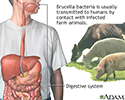
Brucella can infect cattle, goats, camels, dogs, and pigs. The bacteria can spread to humans by:
- Coming in contact with infected meat or the placenta of infected animals
- Eating unpasteurized cheese
- Drinking unpasteurized milk
Brucellosis is rare in the United States. About 100 to 200 cases occur each year. Most cases are caused by Brucella melitensis bacteria.
People working in jobs where they often come in contact with animals or meat are at higher risk. This includes slaughterhouse workers, farmers, and veterinarians.
Brucella is found in many other countries worldwide including:
- Egypt
- Iraq
- Iran
- Jordan
- Saudi Arabia
- Chad
- Greece
- Mexico
Symptoms
Acute brucellosis may begin with mild flu-like symptoms, or symptoms such as:


- Abdominal pain
- Back pain
- Fever and chills
- Excessive sweating
- Fatigue
- Headache
- Joint and muscle pain
- Loss of appetite
- Swollen glands
- Weakness
- Weight loss





High fever spikes often occur every afternoon. The name undulant fever is often used to describe this disease because the fever rises and falls in waves.
The illness may be chronic and last for years. Occasionally, symptoms of brucellosis can be similar to tuberculosis.
Exams and Tests
Your health care provider will examine you and ask about your symptoms. You'll also be asked if you've been in contact with animals or possibly eaten dairy products that were not pasteurized.
Tests that may be done include:
- Blood test for brucellosis
- Blood culture
- Bone marrow culture
- Urine culture
- CSF (spinal fluid) culture
- Biopsy and culture of specimen from affected organ


Treatment
Antibiotics are used to treat the infection and prevent it from coming back. These include:
- Doxycycline
- Streptomycin
- Gentamicin
- Rifampin
Often, you need to take antibiotics for 6 weeks. If there are complications from brucellosis, you will likely need to take the medicines for a longer period.
Outlook (Prognosis)
Symptoms may come and go for years. Also, the illness can come back after a long period without symptoms.
Possible Complications
Health problems that may result from brucellosis include:
- Bone and joint infection and damage
- Encephalitis (swelling or inflammation of the brain)
- Infective endocarditis (inflammation of the inside lining of the heart chambers and heart valves)
- Meningitis (infection of the membranes covering the brain and spinal cord)


When to Contact a Medical Professional
Contact your provider for an appointment if:
- You develop symptoms of brucellosis
- Your symptoms get worse or do not improve with treatment
- You develop new symptoms after treatment for brucellosis
Prevention
Drinking and eating only pasteurized dairy products, such as milk and cheeses, is the most important way to reduce the risk for brucellosis. People who handle meat should wear protective eyewear and clothing and protect skin breaks from infection.

Detecting infected animals controls the infection at its source. Vaccination is available for cattle, but not humans.
References
Downes KJ. Brucella. In: Kliegman RM, St. Geme JW, Blum NJ, et al, eds. Nelson Textbook of Pediatrics. 22nd ed. Philadelphia, PA: Elsevier; 2025:chap 253.
Gul HC, Erdem H. Brucellosis (Brucella species). In: Blaser MJ, Cohen JI, Holland SM, et al, eds. Mandell, Douglas, and Bennett's Principles and Practice of Infectious Diseases. 10th ed. Philadelphia, PA: Elsevier; 2026:chap 231.
Salvana EMT. Brucellosis. In: Goldman L, Cooney KA, eds. Goldman-Cecil Medicine. 27th ed. Philadelphia, PA: Elsevier; 2024:chap 286.
Review Date: 8/5/2025
Reviewed By: Jatin M. Vyas, MD, PhD, Roy and Diana Vagelos Professor in Medicine, Columbia University Vagelos College of Physicians and Surgeons, Division of Infectious Diseases, Department of Medicine, New York, NY. Also reviewed by David C. Dugdale, MD, Medical Director, Brenda Conaway, Editorial Director, and the A.D.A.M. Editorial team.
© 1997- A.D.A.M., a business unit of Ebix, Inc. Any duplication or distribution of the information contained herein is strictly prohibited.
 All rights reserved.