

Fanconi syndrome
De Toni-Fanconi-Debré syndrome
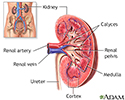
Fanconi syndrome is a disorder of the kidney tubes in which certain substances normally absorbed into the bloodstream by the kidneys are released into the urine instead.
Causes
Fanconi syndrome can be caused by variant genes, or it may result later in life due to kidney damage. Sometimes the cause of Fanconi syndrome is unknown.
Common causes of Fanconi syndrome in children are genetic variations that affect the body's ability to break down certain compounds such as:
- Cystine (cystinosis)
- Fructose (fructose intolerance)
- Galactose (galactosemia)
- Glycogen (glycogen storage disease)

Cystinosis is the most common cause of Fanconi syndrome in children.
Other causes in children include:
- Exposure to heavy metals such as lead, mercury, or cadmium
- Lowe syndrome, a rare genetic disorder of the eyes, brain, and kidneys
- Wilson disease, a genetic disorder resulting in accumulation of excess copper in the body
- Dent disease, a rare genetic disorder of the kidneys

In adults, Fanconi syndrome can be caused by various things that damage the kidneys, including:
- Certain medicines, such as including azathioprine, cidofovir, gentamicin, and tetracycline
- Kidney transplant
- Light chain deposition disease
- Multiple myeloma
- Primary amyloidosis

Symptoms
Symptoms include:
- Passing large amounts of urine, which can lead to dehydration
- Excessive thirst
- Severe bone pain
- Fractures due to bone weakness
- Muscle weakness


Exams and Tests
Lab tests may show that too much of the following substances may be lost in the urine:
- Amino acids
- Bicarbonate
- Glucose
- Magnesium
- Phosphate
- Potassium
- Sodium
- Uric acid


Loss of these substances can lead to a variety of problems. Further tests and a physical exam may show signs of:
- Dehydration due to excess urination
- Growth failure
- Osteomalacia
- Rickets
- Type 2 renal tubular acidosis


Treatment
Many different diseases can cause Fanconi syndrome. The underlying cause and its symptoms should be treated as appropriate.
Outlook (Prognosis)
The prognosis depends on the underlying disease.
When to Contact a Medical Professional
Contact your health care provider if you have dehydration or muscle weakness.
References
Chua AN, Kumar R, Foreman JW. Fanconi syndrome and other proximal tubule disorders. In: Johnson RJ, Floege J, Tonelli M, eds. Comprehensive Clinical Nephrology. 7th ed. Philadelphia, PA: Elsevier; 2024:chap 50.
Kliegman RM, St. Geme JW, Blum NJ, et al. Conditions associated with proteinuria. In: Kliegman RM, St. Geme JW, Blum NJ, et al, eds. Nelson Textbook of Pediatrics. 22nd ed. Philadelphia, PA: Elsevier; 2025:chap 566.
Seifter JL. Acid-base disorders. In: Goldman L, Cooney KA, eds. Goldman-Cecil Medicine. 27th ed. Philadelphia, PA: Elsevier; 2024:chap 104.
Review Date: 1/29/2026
Reviewed By: Warren Brenner, MD, Oncologist, Lynn Cancer Institute, Boca Raton, FL. Review provided by VeriMed Healthcare Network. Also reviewed by David C. Dugdale, MD, Medical Director, Brenda Conaway, Editorial Director, and the A.D.A.M. Editorial team.
© 1997- A.D.A.M., a business unit of Ebix, Inc. Any duplication or distribution of the information contained herein is strictly prohibited.
 All rights reserved.